
New insights into immature neurons in the aging Alzheimer’s brain
4 May 2026
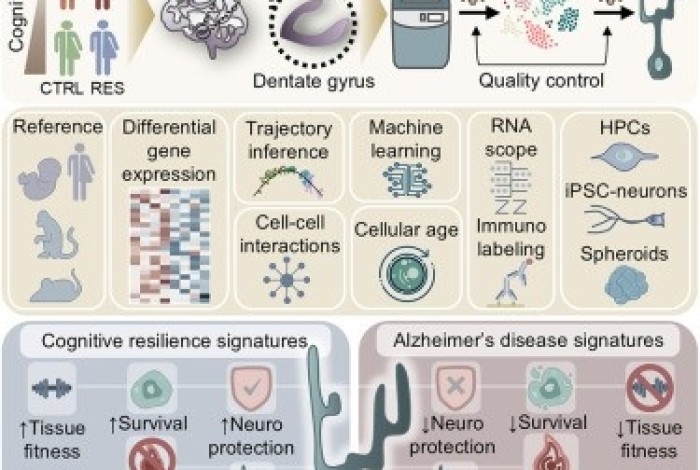
iCNS associated scientist Evgenia Salta and colleagues at the Netherlands Institute for Neuroscience (NIN), together with Paul Lucassen and Carlos Fitzsimons have published a new study in Cell Stem Cell addressing a long-standing question in brain research: do immature neurons in the adult human brain matter, especially in the context of neurodegenerative disease?
Using single-nucleus RNA sequencing on hippocampal tissue from aged healthy individuals, Alzheimer’s disease (AD) patients, and people showing resilience to dementia, the team uncovered persistent populations of immature neurons across all donor groups. These cells display “juvenile”-like molecular signatures and cellular functions.
Crucially, the study shows that these juvenile functions are compromised in AD, suggesting that immature neurons may actively contribute to maintaining homeostasis in the aged human hippocampus and to cognitive resilience in the face of AD pathology.
“At iCNS, we see this work as a powerful example of how omics technologies applied to human brain tissue can reveal mechanisms of disease that would otherwise remain hidden.”
This work helps bridge the gap between rodent findings and the human brain and opens new avenues for understanding why some people remain cognitively resilient despite Alzheimer’s-related changes.
The original publication can be found here. Following this publication, a feature article on this work has also appeared in the Dutch newspaper NRC.