
Adhesion GPCRs in the Spotlight
22 April 2026
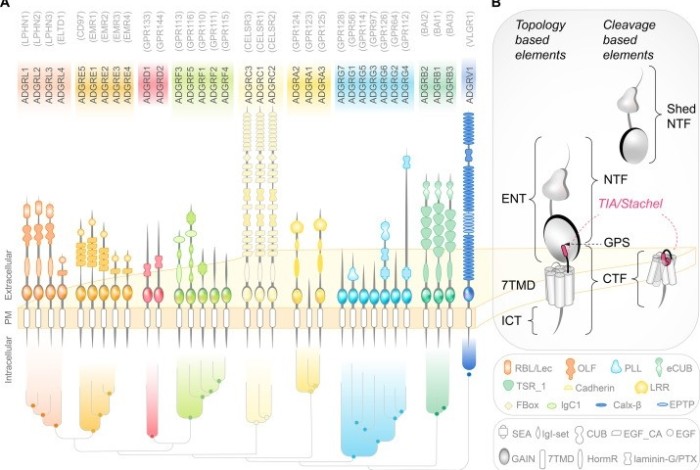
Adhesion G protein-coupled receptors (aGPCRs) constitute one of the five major families within the GPCR superfamily. Since their recognition as a distinct receptor class, researchers from a wide range of scientific disciplines have worked to unravel their molecular architecture, biochemical and pharmacological properties, physiological functions, and roles in disease.
An authoritative review published in Pharmacological Reviews (2026), co-authored by Jörg Hamann, provides a comprehensive overview of the current state of aGPCR research, summarizing the major advances achieved since the introduction of a unified nomenclature in 2015. The review highlights progress in understanding aGPCR molecular structure and activation mechanisms, ligand interactions, expression patterns, and signaling strategies. It also outlines their increasing relevance in human physiology and pathology, as well as their growing potential as drug targets. Notably, several aGPCRs are prominently expressed in the central nervous system, including ADGRG1 (GPR56), one of the pre-defined target molecules of iCNS.
Jörg Hamann cloned in 1995 the first adhesion GPCR and, one year later, demonstrated its ability to bind a cellular ligand. In 2012, he co-founded the international Adhesion GPCR Consortium and in 2015, he contributed to the current adhesion GPCR nomenclature (Pharmacological Reviews, 2015).